.png)
The Mountaintop Experience: Why I set up the company
Updated: Jun 10
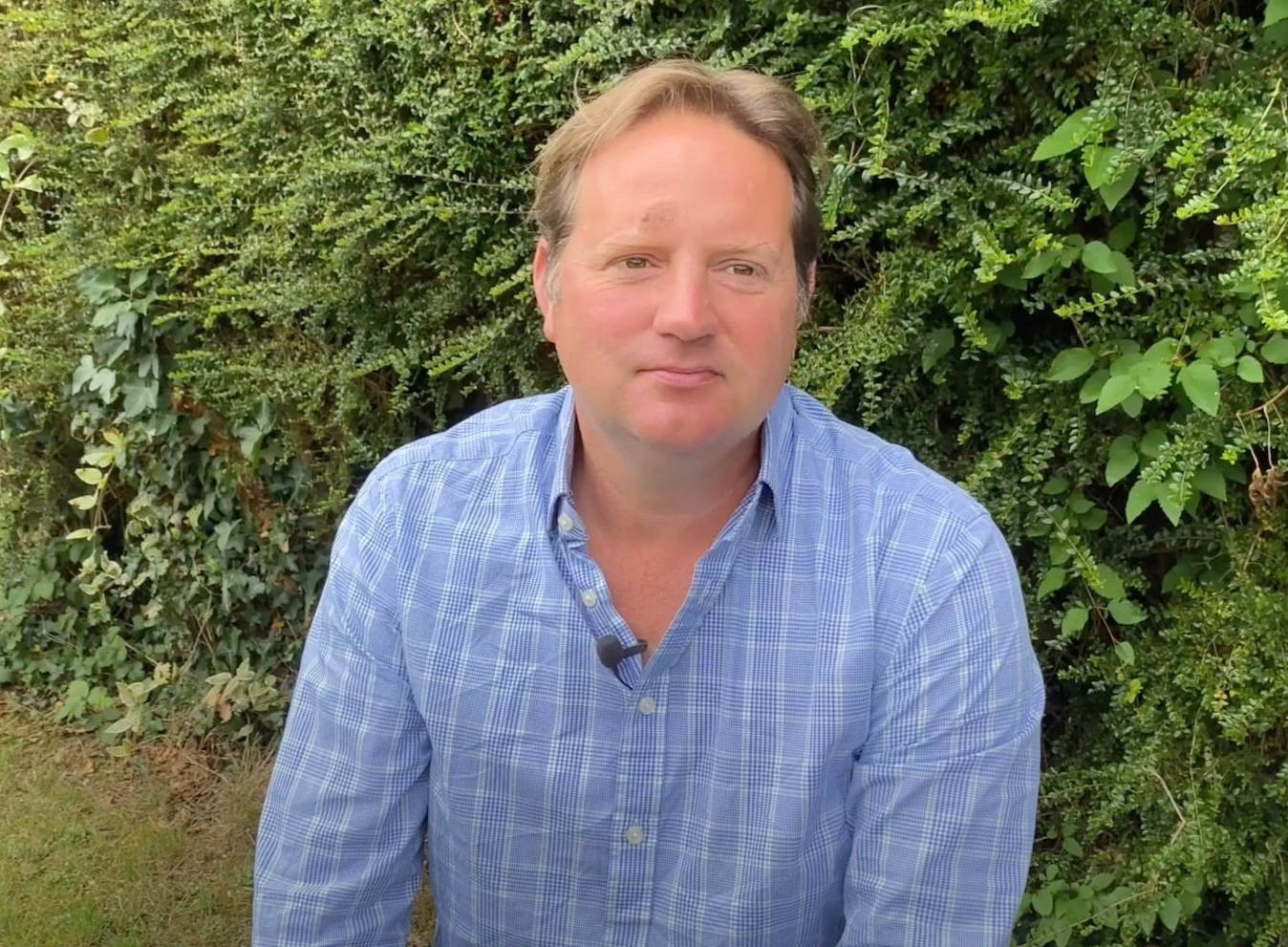
People sometimes talk about ‘mountaintop experiences’ and the Good Earth Investments idea really crystalised on Mount Sinai. I was spending 10 days climbing this mountain and running a conference in Egypt with 30 leaders of churches, education and finance, mostly drawn from across Africa, and asking the fundamental question of what is really needed at this key moment. My main workshop group was made of Bishops and Archbishops whose clear message to me was that they were looking for new ways to create economic vibrancy from this precious resource of land, and that they wanted help in exploring this.

I spent twenty years as a pastor and academic theologian, but also have been running a conservation farm of my own for the last thirteen years, and had been exploring these questions avidly and energetically for some time, both within a UK setting and elsewhere. Much has been attempted in the charity sector with deep meaning and compassion over the last decades, but my friends from Uganda, Burundi, Rwanda, Mozambique, Nigeria and elsewhere urged me to think again and focus on business and enterprise solutions. In other words - ‘trade not aid’. This is easier to say than to do, and I had been developing models using my own very small farm experience to see that value adding with strong conservation and community benefit with land initiatives could be challenging. I was on a journey myself, from the charity sector, through the co-operative into a commercially robust approach.
I founded the Good Earth vision within weeks of coming down the mountain, and began the process of constructing the ethical frame, the corporate structure and the commercial viability of early stage ventures. We began with the landowners and the farmers, we integrated green and conservation lessons, we built community benefit and sound commercial margins, and a variety of verticals emerged and a pipeline of projects and partnerships.

The Ethical Journey is inspired by my love of Augustinian ethics, and forging ancient wisdom with future opportunities and modern dilemmas. The structural needs create impact assessment and financial approaches that make room for global investors to participate in East African value co-creation without overly extractive, exploitative or short termist business practices. Thus we have a global investment scope but highly localised venture targets, creating bridges from one side of the world to the other that can sustain trade, friendship and innovation.
When one aims for land-based value what emerges is a longer and more stable timeframe, enhancing land owners not pressurising their ownership. Our projects are selected or devised for an engagement which will leave our partners with sustainable wealth, and the biodiversity, land and soil better than when we began working together.
I therefore approach each new initiative and project with longer term horizons, much of it borne out of the reality of running a smallholding myself since 2012, pursuing diversification, and learning the disciplines and labour unique to land ownership and management. Things often take time.
Doughnut Economics
As I have developed a passion for conservation I have personally tried to balance this with the difficulties inherent in capital hungry and often lower margin agriculture. I have come to accept that matching the land and climate with what naturally thrives is key, as it also reduces costs. I have been influenced by contemporary economic modelling of Kate Raworth in creating benefit through our economic activity, rather than short term extractive value. Without the jargon this might mean in a specific decision making moment is ‘when I am deciding on, say a new technology, are there other benefits that this decision could lead to that may not cost us more, but could have other benefits’.
Doughnut Economics is the phrase Raworth coined to try to visualise an approach to economic life which was realistic about cost and benefit to the environment and people and urging this as part of economic calculations. For agricultural businesses this may mean - have we calculated the human and environmental cost of high nitrates in the water system, not just the economic decisions that we make. This is a tacit rejection of the Friedman Doctrine (That ‘the social responsibility of a business is to increase its profits’ or in other words that maximising shareholder value is the primary ethic of company directors). This economic simplicity has been a powerful driver of free market and industrialisation, but in reducing capital to finance alone, it can willfully ignore other ‘stakeholders’ who may not be ‘shareholders’, and relies only on civil and criminal law to restrain its extractive and exploitative tendencies.
On my farm these are the questions I have been asking for a dozen years at a very small scale. Rotational grazing of sheep may be more inconvenient, but it may enhance biodiversity and, done correctly, would encourage wild flower growth in the meadows. Can we use the non sellable wool in our compost piles, can we use the chickens to clear weeded areas, and the goats to control our brambles. Can we choose hawthorne hedges instead of barbed wire, and if so, how much extra would this cost us? What would the benefits be if we made this choice to the beauty and wildlife of the farm and is this affordable? If we are using fewer powertools, certain jobs will take longer, but there is less noise pollution, and less danger to workers. What value do we place on quietness and being able to appreciate birdsong? We need to be economically realistic - if I do not spray I don’t get good fruit yields, this may mean that I cannot justify fruit growing on an economic basis. Is there some other benefit (directly economic or for social benefit) that I can find to justify this decision. On my small farm I work with community groups frequently - home schools, churches and charities, providing outdoor space for communities confined to small urban flats, psychologists using outdoor space for therapy. Each of these creates small income for the farm, so it is no longer a zero sum game.
So, from the mountaintop to the farm, via Augustine ethics, I have arrived at the start of a new way of approaching socially minded, land-based enterprise.


Comments